Sign
my guestbook. View
my guestbook. ←Previous Next→ Paris Journal 2007 Home
|
Sign
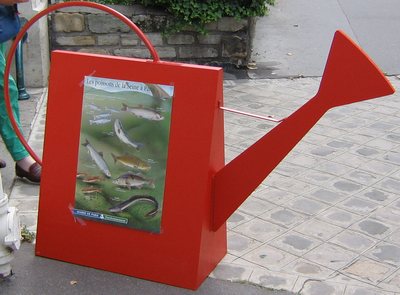
marking the entrance to gardens open for the Fête
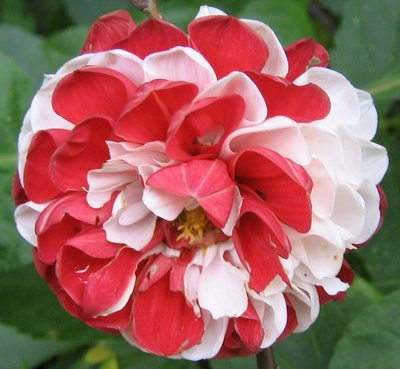
Flower
from the garden at the St. François Xavier
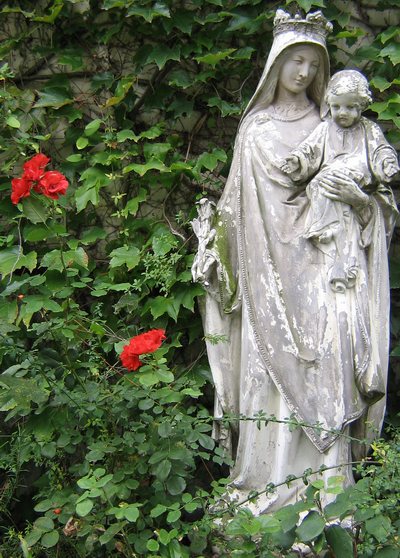
Madonna
statue in the St. François Xavier garden.
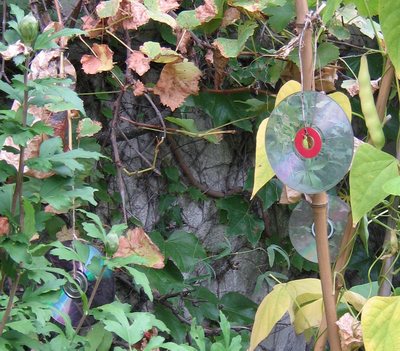
Old
CDs (called cédéroms in French, as if they did not
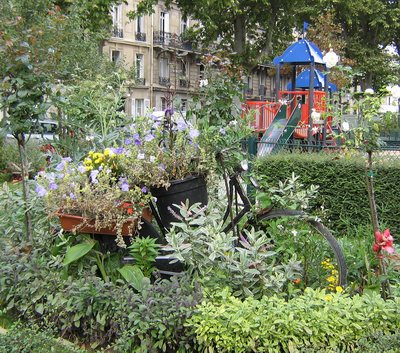
Bicycle
used as a planter in the Place du
On the
way from the garden at St. François Xavier to the
|
Wednesday, September 26 Aarrghh! Here I am, once again writing at 4:30AM
because the hearing-impaired neighbor down below insists on having his TV
blaring all night while he sleeps. But it isn’t quite as loud as it was in the wee hours of
Sunday morning. It makes me think of Chuck, our next door neighbor back
in Sanibel. We don’t share a surface
with Chuck. But here, our floor is the
downstairs neighbor’s ceiling. Yet in South Florida one like to keep windows open at
night when the weather allows, and so there is then virtually no solid
barrier between us and Chuck’s TV. Although he is very humble, Chuck is a much more
refined gentleman than the literary critic downstairs. Chuck, like the literary critic, is losing
his hearing. But while we might hear
Chuck’s TV during the evening news hour, he would never, ever be so crude, rude, and crass as to have his TV blaring like
this all night. Chuck is a retired doctor from There is something ironic here -- the low-brow nature
of a television blaring all night – how does that mesh with the fact that the
offender is a supposedly high-brow, intellectual, French literary
critic? (Chuck, on the other hand, was
terrorized by English class at Who knows what the
explanation might be. But one thing is
clear: he cares not one wit for his
neighbors. That makes him an
insensitive brute. As predicted, the weather was gorgeous on Sunday. Out of the brochure for the Fête des Jardins, I had selected four places for us to visit – all
four were places we might not normally see.
The first was the garden of the presbytery for the Église
St. François Xavier on the boulevard des Invalides
in the 7th arrondissement. This church is one that always impresses us as we walk
the shortest route between the two apartments that we occupy during the
course of the summer. Coming from the
6th arrondissement, we take the rue de Babylone
until it ends at the boulevard des Invalides. There, looking like a magnificent cathedral, is the Église St. François Xavier. It is not old; the structure is 19th
century. But the history of the parish
church is interesting because of its clandestine roots during the Revolution. The church has two little parks with play areas on each
side, and a more formal place with a statue of a military figure behind it. But the garden we went to see was behind a
much more modest building, the presbytery, across the street from the church. Thank goodness for the cute red watering-can signs used
to mark the entrance to the gardens that were open on this special day. Otherwise, we might have missed this one. An article about the garden from the Paris Notre-Dame weekly newspaper was
posted. Here’s a translation: It
is a green corner saved from the blacktop.
Voila, thirty years that Colette Briot has
sown and cultivated plants there.
Thanks to her almost daily care, the St. François Xavier parish can
pretend to a veritable garden of a curate.
To discover this space, the parish gardener waits for you on Sunday,
the 24th of September, on the occasion of the Festival of the
Gardens of Paris; she opens the door of her little paradise. The
plants cited in the Bible grow there among the others: vines, olive trees, mustard, sycamore of Zachée, flax, figs, hysope [an
herb with blue flowers], not to mention blackberries and hawthorns. “After dedicating myself to medicinal
plants, I wish to give a biblical dimension to this garden,” explains Colette
Briot. There
are also species that are there for religious reference: the passion flower, the bishop’s bonnet,
and the pope’s money, all from a parishioner who donated the seeds. “I haven’t bought anything that otherwise
would have no interest. These are the
plants that someone either gave me or that I traded.” This little “My
happiness is in cultivating this garden for others, those who love it and
benefit from it,” says Colette. Who
are the happy beneficiaries of this elegant garden? The priests who see it from their windows,
as well as the parish community. “We
have opened it more and more to parish groups who can meet there in the
summer,” explains Father Olivier Derlincourt. A place of reflection, but equally of
solidarity, since single people have been invited to meet there one evening
per week. After seeing this fine garden, we decided to take the
rue Monsieur down to the rue de la Cherche Midi so
we could try to figure out what buildings belonged to the interesting gardens
next to the presbytery’s garden. We
could not see into these gardens, but we are certain that there are some good
ones hidden along rue Monsieur. We had a bit of time to kill before the next garden was
open. So we had lunch at the Marie-Thé café at 102 rue de la Cherche
Midi (telephone 01-42-22-50-40). The
food is good and creative here, and prices are very reasonable. Service is friendly. We recommend this café, especially for a
Sunday brunch. Next on the agenda were two monastery gardens: that of the Lazaristes, and that of the Pères Maristes. The surprise at the Lazariste
garden was that we were invited to see the chapel dedicated to St. Vincent de
Paul, where his body is displayed (encased in wax, we think) ABOVE the
alter! This chapel sits at the back of
the Lazariste garden, and in reality faces the rue
de Sevres. Finally, we visited the garden at the Catholic Institute, the former Carmelite convent, that includes the chapel St. Joseph des Carmes . We like the architecture of this church, especially its dome. This was our chance to see the inside of the dome. |